

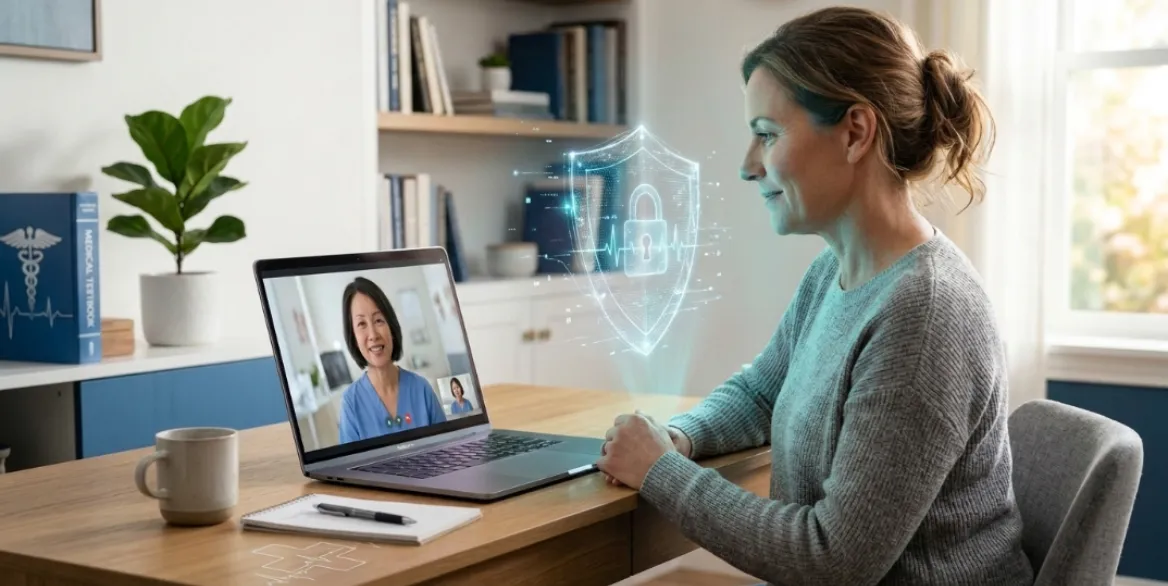
Quick Answer: Is Telemedicine Safe?#
Yes, telemedicine can be a safe and secure way to receive healthcare when provided through reputable healthcare organizations using appropriate security practices and following applicable privacy and healthcare regulations.
Secure telemedicine platforms are designed to protect patient information, maintain confidentiality, and provide private communication between patients and healthcare professionals. However, patients should also take precautions such as using secure internet connections and choosing trusted providers.
Introduction #
The ability to consult a doctor from home has transformed healthcare, making medical advice more convenient and accessible. However, many patients hesitate to use virtual healthcare because they are concerned about the safety of sharing personal medical information online.
Questions such as “Is my medical data protected?” and “Can someone access my online consultation?” are common and understandable.
Healthcare information is among the most sensitive types of personal information. Therefore, privacy, security, and confidentiality are essential components of every telemedicine service
Modern telemedicine platforms use various security measures to protect patient information, but understanding how these protections work helps patients make informed decisions when choosing a telemedicine provider.
Why Privacy and Security Matter in Telemedicine #
During a telemedicine appointment, patients may share sensitive health information with healthcare professionals. Protecting this information is essential to maintain patient privacy and confidentiality.
Patients may share:
- • Personal details
- • Medical history
- • Current symptoms
- • Prescriptions
- • Blood reports
- • Imaging reports such as X-rays, CT scans, or MRI scans
Healthcare records contain sensitive personal information. A trusted telemedicine provider should use secure systems and follow applicable healthcare privacy requirements to help protect patient confidentiality and medical information.
How Telemedicine Platforms Protect Patient Information #
Modern telemedicine platforms use multiple layers of security to protect patient data.
Secure Communication Technology
Virtual consultations usually take place through secure platforms designed to protect conversations and medical information from unauthorized access. Patients should avoid sharing sensitive health information through unsecured channels or unknown websites.
Access Controls and User Authentication
Reliable telemedicine systems use secure login methods and identity verification to help ensure only authorized individuals can access patient information and medical records.
Secure Storage of Medical Records
Healthcare providers often use secure digital systems to store medical documents, consultation records, and health reports while limiting unauthorized access and maintaining patient confidentiality.
Healthcare Privacy Standards and Regulations
Telemedicine providers may follow applicable healthcare privacy and data protection requirements depending on the regions where they operate, helping protect how patient information is collected, stored, used, and shared.
Doctor-Patient Confidentiality in Telemedicine #
Patient confidentiality is a fundamental part of healthcare, whether a consultation takes place in person or through a telemedicine platform. Healthcare professionals are generally expected to protect patient information and maintain confidentiality in accordance with applicable laws, regulations, and professional standards.
Medical information should only be shared in appropriate circumstances as permitted by applicable legal and professional requirements. This helps safeguard patient privacy while supporting safe and effective healthcare.
Patients should feel comfortable discussing their symptoms, medical history, medications, and health concerns honestly. Providing accurate and complete information helps healthcare professionals better understand the patient's condition and provide appropriate medical guidance.
Common Telemedicine Security Risks #
Telemedicine platforms are generally designed with security measures to protect patient information. However, like any digital service, no system is completely free from risk. Understanding common security risks can help patients take simple steps to protect their personal health information.
Potential concerns may include:
- • Using unsecured public Wi-Fi networks
- • Weak passwords or poor account security
- • Sharing medical information through unofficial channels
- • Unauthorized access due to compromised devices
By using trusted telemedicine platforms, securing personal devices, and following good online safety practices, patients can help reduce these risks and better protect their healthcare information.
How Patients Can Protect Their Privacy During a Telemedicine Appointment #
Telemedicine providers play an important role in protecting patient information, but patients can also take simple steps to improve their own digital safety and privacy during virtual consultations.
Follow these best practices:
- • Use a private and quiet location for your consultation
- • Avoid using public Wi-Fi when discussing sensitive medical information
- • Use strong and unique passwords for healthcare accounts
- • Keep your phone, computer, or tablet updated
- • Log out of healthcare platforms after using shared devices
- • Share medical records only through approved and secure channels
- • Verify that you are using the official website or application of your telemedicine provider
These simple precautions can help reduce privacy risks and create a safer, more secure virtual healthcare experience.
How to Choose a Secure Telemedicine Provider#
Not all online healthcare platforms offer the same level of privacy and security. Before booking an appointment, consider the following factors.
Secure Communication Platform
Choose a telemedicine provider that uses secure communication systems designed to protect virtual consultations and patient information.
Look for features such as:
- • Secure video consultations
- • Protected messaging systems
- • Secure sharing of medical information
Secure communication helps reduce the risk of unauthorized access to sensitive healthcare information.
Clear Privacy Policies
A trustworthy telemedicine provider should clearly explain how patient information is collected, stored, used, and protected.
Review information about:
- • Data collection practices
- • Storage and protection of medical records
- • Patient privacy policies
Transparent privacy practices help patients understand how their healthcare information is managed.
Qualified Healthcare Professionals
Choose providers that work with qualified and appropriately licensed healthcare professionals according to applicable regulations.
Consider:
- • Professional qualifications
- • Clinical experience
- • Areas of medical specialization
Qualified healthcare professionals are essential for safe and reliable virtual healthcare.
Secure Medical Record Handling
A reliable telemedicine platform should provide secure methods for uploading, storing, and accessing medical documents.
Look for:
- • Secure document uploads
- • Protected medical record storage
- • Controlled access to patient information
Proper record management helps maintain patient confidentiality and supports continuity of care.
Reliable Patient Support
Good customer support helps patients use the platform confidently and resolve issues quickly when needed.
Reliable support should assist with:
- • Technical issues
- • Appointment scheduling
- • Platform guidance
- • General service-related questions
Responsive patient support contributes to a smoother, safer, and more reliable telemedicine experience.
Telemedicine Privacy Myths vs Facts #
There are many misconceptions about privacy and security in telemedicine. Understanding the facts can help patients make informed decisions when choosing virtual healthcare services.
| Myth | Fact |
|---|---|
| Online doctor consultations are not private | Trusted telemedicine platforms use security measures designed to protect patient confidentiality. |
| Anyone can access my medical records | Access to health information is typically restricted to authorized individuals according to applicable policies and regulations. |
| Telemedicine is less professional than in-person care | Virtual healthcare follows professional standards and can be appropriate for many non-emergency healthcare needs. |
| Video consultations are always recorded | Recording practices depend on the provider, patient consent requirements, and applicable laws. |
| Telemedicine is only for minor illnesses | It can also support specialist consultations, chronic disease management, and medical second opinions when appropriate. |
Choosing a trusted telemedicine provider and understanding how your information is protected can help you use virtual healthcare with greater confidence.
Is Telemedicine Safer Than In-Person Healthcare? #
Both telemedicine and traditional healthcare have important responsibilities when it comes to protecting patient privacy and maintaining confidentiality. The safety of either approach depends on the healthcare provider's practices, the technology used, and patient awareness.
In a physical clinic or hospital, healthcare providers protect medical records and maintain patient confidentiality through established healthcare procedures. Similarly, trusted telemedicine providers use digital security measures to help protect virtual consultations, medical records, and other patient information.
Choosing a reputable healthcare provider, using secure technology, and following good privacy practices can help create a safe healthcare experience, whether your consultation takes place online or in person.
When Should You Avoid Telemedicine? #
Telemedicine can be a safe and effective option for many non-emergency healthcare needs, but it is not appropriate for every medical situation. Some conditions require immediate in-person evaluation, physical examination, diagnostic testing, or emergency treatment.
Seek immediate in-person medical care if you experience:
- • Severe chest pain
- • Difficulty breathing
- • Symptoms of stroke, such as sudden weakness or difficulty speaking
- • Severe bleeding
- • Loss of consciousness
- • Major injuries or accidents
- • Severe allergic reactions
Certain medical conditions may also require a physical examination, diagnostic testing, imaging studies, or procedures that cannot be performed remotely. A healthcare professional can help determine whether an in-person visit is necessary based on your symptoms and medical needs.
Frequently asked questions
Is telemedicine safe to use?
Are online doctor consultations private?
Can someone access my medical records during a telemedicine appointment?
Are telemedicine video calls recorded?
Is it safe to share medical reports online?
How can I protect my privacy during a virtual consultation?
Are telemedicine doctors real and qualified professionals?
Can telemedicine replace hospital visits?
What security features should a telemedicine platform have?
Is telemedicine suitable for international patients?
Key takeaways
- Telemedicine can provide a safe and secure way to access healthcare when using trusted providers
- Patient privacy and confidentiality remain essential in virtual healthcare.
- Secure technology, proper data protection practices, and patient awareness help improve telemedicine safety.
- Patients should choose providers with strong privacy policies, secure systems, and qualified healthcare professionals
- Emergency situations and conditions requiring physical examinations still require in-person medical care.